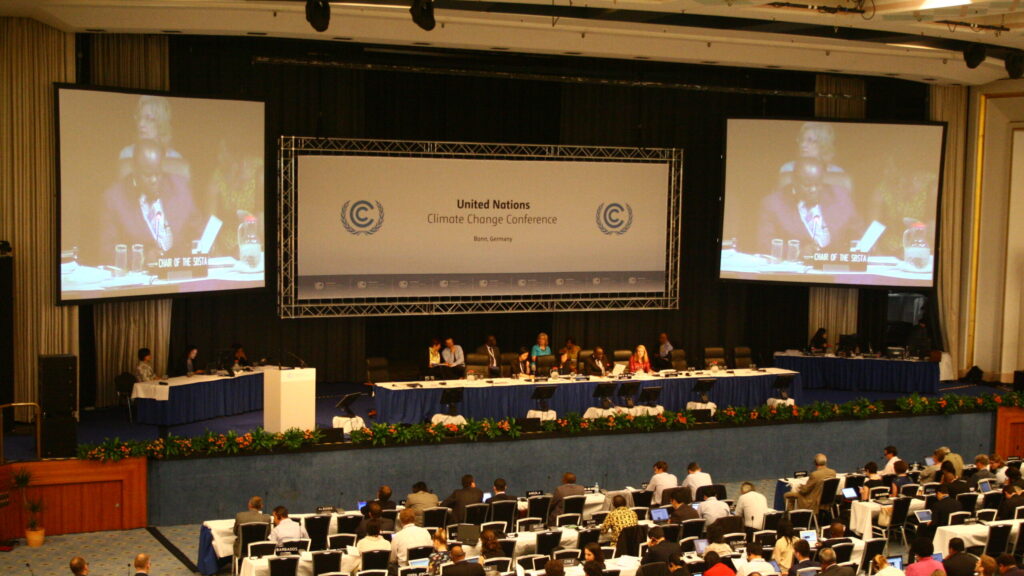

The COP31 climate summit in Antalya, Türkiye, spilled into Saturday after its closing plenary was suspended late on Friday night, with nearly 200 nations still deadlocked over fossil fuels, climate finance and adaptation funding. The plenary was suspended at 10:29 pm local time, and negotiations were expected to resume on Saturday, with COP31 President Murat Kurum promising a third version of the final agreement on Saturday morning.
The talks went beyond their scheduled Friday deadline after a second draft of the final agreement stripped out all mention of fossil fuels, sending negotiators back to the bargaining table. The earlier draft had called for a faster phase-out of fossil fuels, but producers led by Saudi Arabia fiercely resisted, and the pared-down text removed the language entirely. The draft also dropped a proposed target of $120 billion a year in adaptation finance by 2035, angering developing nations. Ethiopia was confirmed as host of COP32 in 2027, with its capital Addis Ababa selected as the host city.
Fossil Fuels Vanish From the Draft
The omission drew furious responses. ‘It is not acceptable to have a COP or a cover decision that does not even mention fossil fuels and we simply will not put up with it,’ said Juan Carlos Navarro, Panama’s environment minister, who has vowed to formally object if the final deal does not add climate finance, cap oil production and acknowledge failing goals. Navarro earlier accused the talks of being held hostage by a ‘petroleum mafia.’ Germany’s environment minister Carsten Schneider said: ‘There are some who don’t want us to use the word fossil fuels at this COP. There are some who make a lot of money with that.’ France’s Monique Barbut attacked the draft’s embrace of carbon capture technology as a licence to keep burning oil and gas.
For the first time at a COP, the agreement acknowledges that the goal of keeping global warming below 1.5 degrees Celsius has been missed, and the world is entering a period called ‘overshoot.’ October 2026 was 1.8 degrees warmer than the mid-1800s, according to Berkeley Earth. The draft also calls for countries to raise the share of energy demand met by electricity to 35 percent by 2035, without saying that electricity must come from renewables.
Saturday Decides It
‘Everything seems pretty stuck,’ said Ilana Seid, Palau’s representative and chair of the Alliance of Small Island States. ‘There are a lot of positions that cut into other coalition red lines, and there seems to be very little room for movement.’ The European Union has warned the talks could end with no agreed deal at all if the text does not change substantially. One proposal under discussion would keep fossil fuels out of the text in exchange for petro-states signing up to the 35 percent electrification pledge, but that would not solve the money problem for developing nations. As delegates worked through the night in Antalya, the question was whether Saturday would produce a compromise or a failure.
Related: the COP31 draft dropped the fossil fuel phaseout as talks ran past deadline