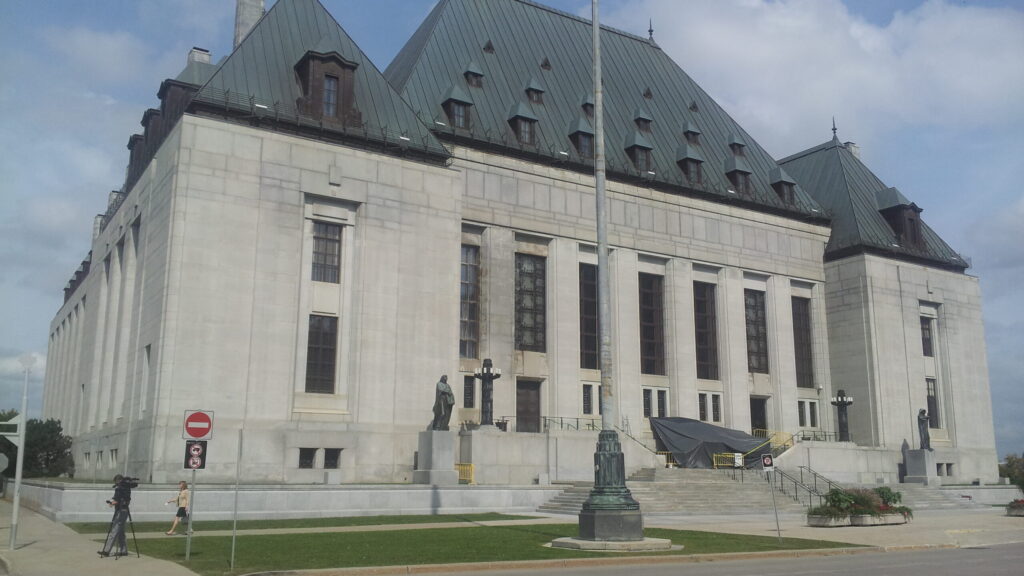

Canada’s Supreme Court has upheld Quebec’s ban on religious symbols for public servants, settling one of the most closely watched constitutional fights in recent history. In a 6-1 ruling released on Friday, the court found Quebec was entitled to shield the law, known as Bill 21, from most court challenges by invoking the notwithstanding clause of the Canadian Charter of Rights and Freedoms.
The Quebec religious symbols ban, passed in 2019, bars public employees in positions of authority – including teachers, police officers, government lawyers and judges – from wearing hijabs, turbans, yarmulkes or crosses while on duty. The case, English Montreal School Board v. Quebec, was heard over four days earlier this year in one of the longest hearings in the court’s 151-year history.
Notwithstanding clause survives its biggest test
At the heart of the ruling was Quebec’s pre-emptive use of section 33, the notwithstanding clause, which allows a province or Parliament to override certain Charter rights for renewable five-year periods. Chief Justice Richard Wagner, writing for the majority, said the law “is rooted in Quebec’s legitimate and historical commitment to ensuring the laicity of the state in a free and democratic society.”
The court confirmed that section 33 faces no limits beyond those written into the provision itself, a finding that rights groups warned could weaken legal protections for fundamental rights. The judges also confirmed that courts may still declare a law inconsistent with Charter rights even when the clause has been invoked, although a differently constituted majority declined to do so in this case.
Bill 21 was first protected by the clause when adopted in 2019 and renewed in 2024, with its next renewal due in 2029. The 532-page ruling was released on Friday morning and drew so much traffic that the court’s website crashed.
One provision struck down
The law did not survive entirely intact. All seven justices agreed that a provision requiring members of Quebec’s National Assembly to perform their duties with their faces uncovered infringed democratic rights protected under section 3 of the Charter, which cannot be overridden using the notwithstanding clause. Elected members may therefore wear religious symbols, including face coverings required by their faith.
The court also rejected most arguments that Bill 21 violated Charter provisions not subject to the notwithstanding clause, including guarantees on the equality of men and women and the education rights of Quebec’s English-speaking minority.
Reaction splits along familiar lines
Reaction across Canada was sharply divided. Alberta Premier Danielle Smith welcomed the decision, writing on X that it “confirms what Alberta has long maintained: the notwithstanding clause is a legitimate and essential part of our Constitution.” Rights groups warned the ruling unfairly targets Muslim women.
The decision lands as Prime Minister Mark Carney’s government navigates a tense relationship with the provinces, and it follows a confidence-vote win for the Carney budget earlier this month.