
The United States disabled a commercial ship trying to leave Iran on Thursday, and Tehran answered within hours by vowing to break the American naval blockade and keep the Strait of Hormuz shut. The confrontation is the sharpest escalation yet in a standoff that has closed the world’s most important oil waterway for nine months.
Ship Disabled in the Gulf of Oman
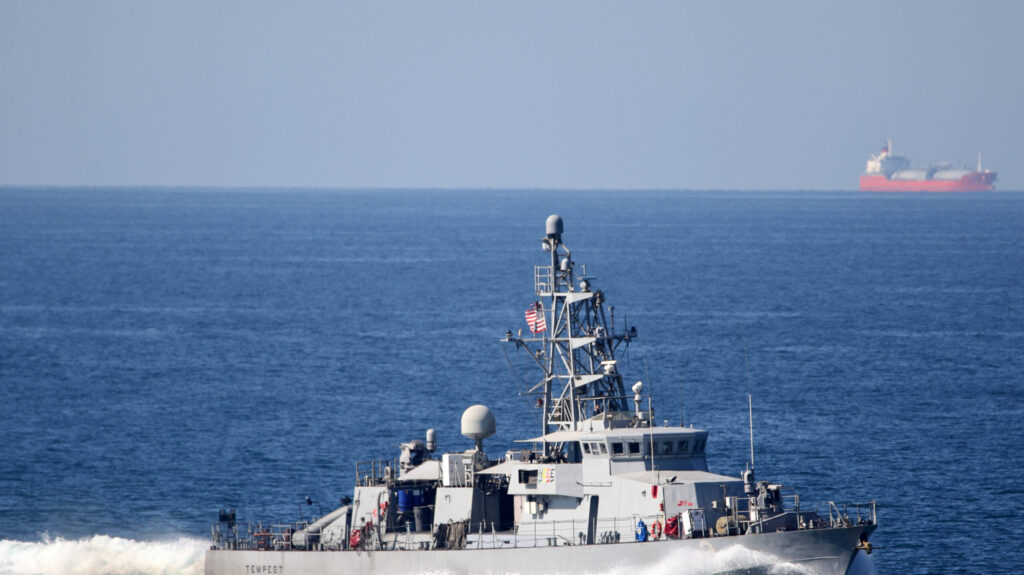
According to US Central Command, military aircraft fired precision munitions that struck the stern of the Palau-flagged bulk carrier M/V Pacific Archer in the Gulf of Oman after it departed the Iranian port city of Bandar Abbas. The strike disabled the vessel’s propulsion system, while the civilian crew was unharmed, the command said.
Washington reimposed its naval blockade of Iranian ports in July, and earlier this month announced Task Force Iron Gate to restrict the movement of weapons and sanctioned materials across Iran’s land borders and the Caspian Sea. The Associated Press has reported that US forces have diverted 158 merchant ships and disabled at least 15 vessels since the operation began.
The strike is the most visible enforcement action on the sea side of the blockade since the operation began. Central Command warned all mariners in the Gulf of Oman and the approaches to the strait to heed its blockade warnings.
Tehran Vows to Break the Blockade
Mohammad Mokhber, an adviser to Iran’s Supreme Leader Ayatollah Mojtaba Khamenei, vowed on Friday to break the embargo, according to Iranian state media. “Neither will the Strait of Hormuz be reopened, nor will we allow the blockade to remain in place,” state media reported Mokhber saying. He gave no details of Iran’s plans.
Separately, Iranian navy commander Shahram Irani told state television that operations to break the blockade had already begun. “Breaking through the enemy blockade is underway and our ports are active today,” he said. “Contrary to all propaganda, maritime escorts are taking place and we stand with the shipowners and sailors.”
Irani accused Washington of trying to sever Iran’s economic lifeline and said the effort had failed so far.
Oil Markets Watch the Strait
The war broke out in February, when the US and Israel launched strikes on Iran, and Tehran answered by closing the Strait of Hormuz, the narrow channel through which a fifth of the world’s traded oil normally flows. Brent crude settled at $95.44 a barrel on Friday, its first weekly gain in November, as tanker attacks kept supply fears in focus.
Iran has not said what steps it will take to challenge the blockade, and the navy’s announcement gives no indication of when or how its operations will affect maritime traffic. For now, the strait remains closed and the blockade remains in force, with both sides signalling they will not back down. Three tankers were hit in Hormuz earlier this week, and the region remains on edge after a drone attack in Kuwait killed two Italian defence technicians.