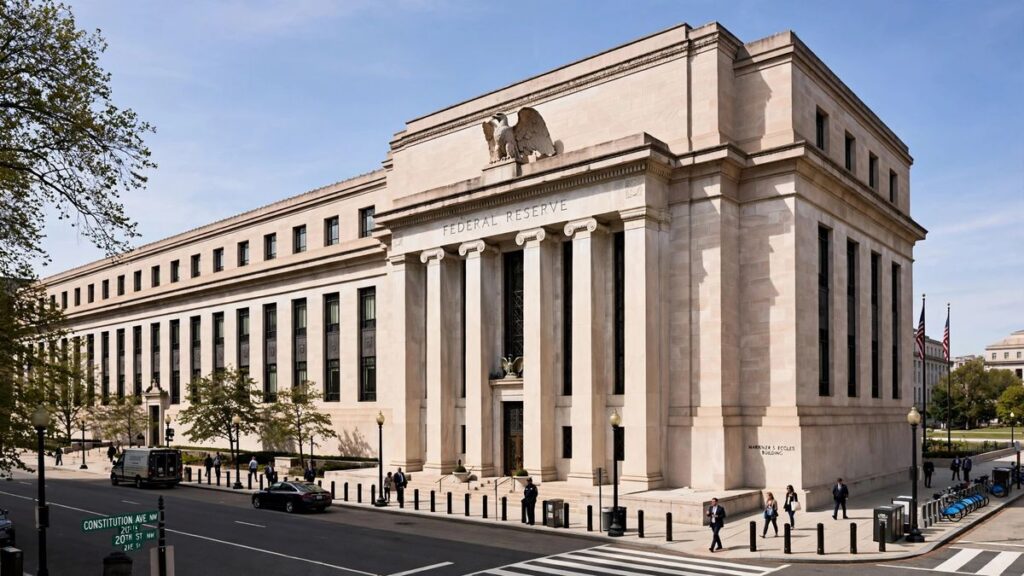

The Federal Reserve is widely expected to hold interest rates steady at its October 27-28 meeting — a decision landing just six days before the November 3 midterm elections and carrying unusual political weight. The announcement is due Wednesday, October 28, at 2:00 p.m. ET, followed by a press conference at 2:30 p.m.
A Reuters poll conducted October 16-20 found that 94 of 100 economists expect the central bank to keep the federal funds rate at its current 3.75% to 4.00% range. But the expected pause may prove temporary: the same survey points to another increase in December.
Why the Fed is on hold — for now
The Fed raised rates by a quarter point on September 16, its first increase in more than three years, in a unanimous 12-0 vote. Minutes released October 7 showed most officials expect another increase to be appropriate by year’s end, but gave no timeline.
September’s inflation report complicated the picture: consumer prices rose 3.7% year over year, up from 3.4% in August, with gasoline up 9.1% in the month driving more than half the jump. New York Fed President John Williams has said there is “no need for urgency,” but officials continue to warn inflation remains too high.
The politics of the timing
A rate decision six days before voters choose Congress invites intense scrutiny. A hike could cool demand but make mortgages, business loans and credit cards more expensive; holding steady supports activity while risking slower progress against inflation. Either way, the Fed’s assessment of the economy will feed directly into the campaign’s closing argument about the cost of living.
J.P. Morgan Wealth Management’s base case is a hold in October with another 50 basis points of tightening into 2027. Prediction markets currently price only about an 11-12% chance of an October hike. For households and businesses, the message is clear: borrowing costs are staying higher for longer, and December is the next date that matters.
Money markets currently see only about a 12 percent chance of an October hike, according to CME FedWatch data, with a December move priced as the more likely next step. For the Fed, the bigger question is whether September’s hot inflation print — 3.7 percent, driven by gasoline — proves a blip or the start of a renewed climb.



Pingback: IMF: AI Boom Offsets Energy Shock, Global Growth Holds at 3.1% - ReportRig.com