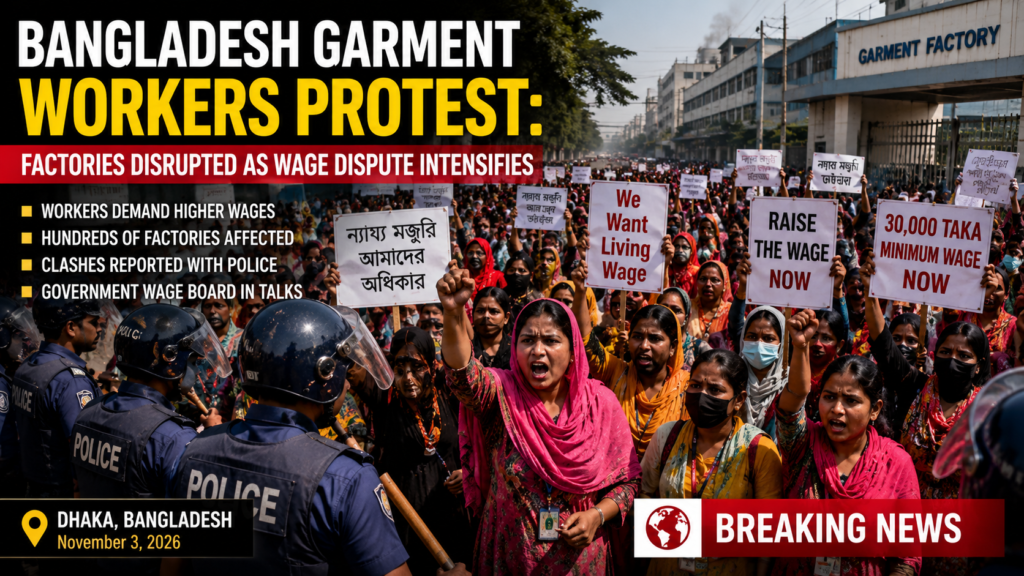

Garment workers in Bangladesh have entered their fourth consecutive day of protests over demands for higher wages, disrupting factory operations, triggering clashes with police and raising concerns about the country’s multi-billion-dollar textile industry.
Bangladesh is experiencing growing industrial unrest as thousands of garment workers continue demonstrations demanding better pay and improved working conditions.
The protests, which began on Saturday, October 31, 2026, have spread across major manufacturing areas, including Dhaka, Ashulia, Gazipur and Savar.
The demonstrations have resulted in factory closures, blocked highways and confrontations between protesters and security forces.
According to reports published on Tuesday, November 3, police have used tear gas and sound grenades to disperse demonstrators as tensions continue to rise.Workers Demand Higher Monthly Wages.
At the center of the protests is a demand for a significant increase in the minimum monthly wage.Garment workers are demanding that their minimum monthly salary be increased from 12,500 Bangladeshi taka to 30,000 taka.
Workers argue that the current minimum wage is no longer sufficient to cover basic necessities such as food, accommodation, transportation, healthcare and children’s education.
Rising inflation and the increasing cost of living have placed additional financial pressure on thousands of families who depend on garment factory employment.Workers say they want a fairer share of the profits generated by an industry that supplies clothing to some of the world’s biggest fashion brands.
Hundreds of Factories Suspend Operations
The demonstrations have severely affected Bangladesh’s garment manufacturing industry.Nearly 700 factories were reportedly closed on Monday as unrest spread across major industrial areas.
Although some factories attempted to resume operations, fresh demonstrations forced additional closures and temporary suspensions on Tuesday.Workers also blocked major roads and highways, disrupting transportation and making it difficult for businesses to move goods.
The situation has raised concerns among manufacturers about production schedules, international orders and possible financial losses.
Police Use Tear Gas as Protests Turn Violent
Tensions escalated as demonstrators clashed with police officers in several industrial communities.
Security personnel deployed tear gas and sound grenades to disperse crowds after some protesters reportedly threw stones and damaged property.Dozens of people, including police officers, were reported injured during the confrontations.
Additional security personnel were deployed to maintain order and prevent further violence.
Authorities have urged workers to remain calm and allow negotiations over the proposed wage adjustments to continue.
Government Establishes Wage BoardIn response to the growing crisis, the Bangladeshi government established a six-member wage board on November 1 to review workers’ salary demands.
The board includes representatives of workers, employers, government officials and an independent member.
Its responsibility is to examine the existing wage structure and recommend an appropriate minimum salary for garment industry employees.
However, the announcement has not immediately stopped the demonstrations, as workers continue demanding urgent improvements to their financial conditions.
Global Fashion Industry Faces Potential Disruptions
Bangladesh is one of the world’s largest garment exporters, making the ongoing protests a significant concern for international fashion companies.
The industry employs approximately four million people and contributes more than 80 per cent of the country’s export earnings.
Major international fashion brands, including H&M, Zara and Gap, source clothing from Bangladesh.
H&M has indicated that it is monitoring the situation and assessing possible effects on its supply chain.
Although the company reported limited temporary factory closures, prolonged industrial unrest could create delays in manufacturing and international shipments.
Why the Protests Matter to Bangladesh’s Economy
The garment industry is one of the most important pillars of Bangladesh’s economy.
Millions of families depend directly or indirectly on the sector for their livelihoods.
Extended factory closures could affect workers’ incomes, manufacturers’ finances and the country’s international trade relationships.
Business owners are also facing rising production expenses, energy uncertainty and competition from other major garment-producing countries.
The situation therefore presents a difficult challenge for the government as it attempts to balance workers’ demands with the financial realities facing manufacturers.
What Happens Next?
Attention is now focused on the newly established wage board and whether its recommendations will satisfy workers.
Government officials, industry representatives and labor organizations are under pressure to find a lasting solution before the unrest causes further economic damage.
For now, demonstrations and factory disruptions continue in several industrial areas.
The coming days could prove crucial in determining whether negotiations will succeed or whether Bangladesh’s garment industry will face further instability.
As workers continue demanding better wages, the crisis highlights the growing importance of fair compensation, workers’ rights and sustainable employment in one of the world’s most important clothing manufacturing industries.