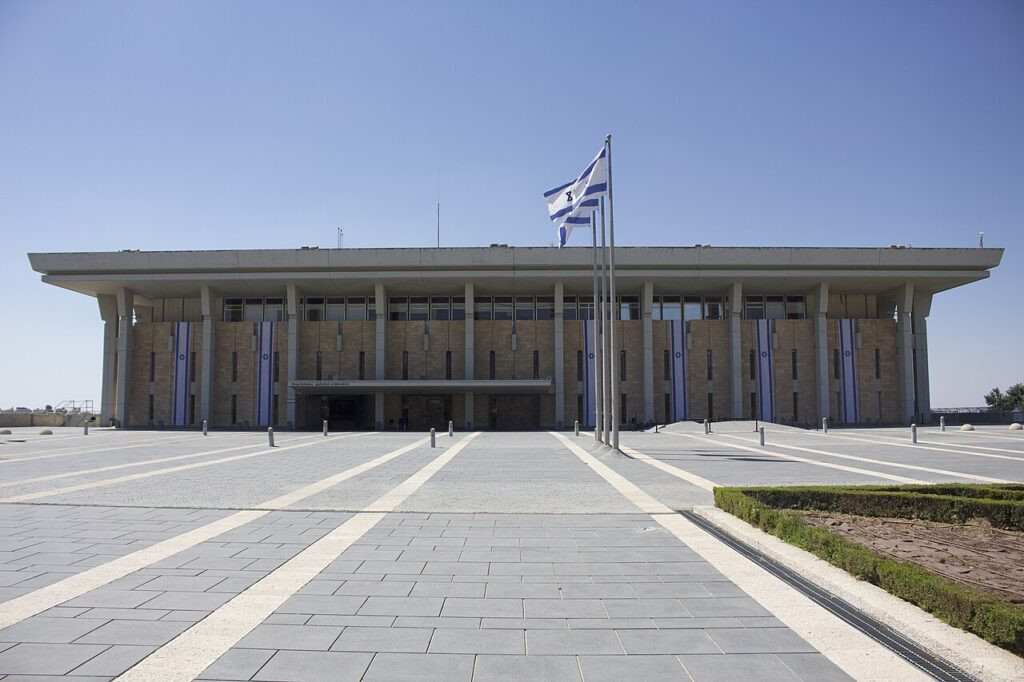


Israel’s new parliament was sworn in on Tuesday without a new government, after a deadlocked general election stripped Prime Minister Benjamin Netanyahu of his parliamentary majority but left his main rivals with no clear path to power either. The 120 lawmakers elected in the October 27 vote took their oaths of office in the 26th Knesset, nearly half of them serving for the first time.
Gadi Eisenkot, the politician tasked with forming a new Israeli government, pledged on Tuesday to reverse many of Netanyahu’s policies as the new parliament was sworn in. “We must act urgently to establish a national emergency government,” Eisenkot said on Tuesday afternoon, rejecting a unity government offer from Netanyahu the same day. Eisenkot, a former military chief who leads the Yashar party, has up to six weeks to form a government that would end the tenure of Israel’s longest-serving prime minister.
The arithmetic of a hung parliament
The final count, published on November 4, gave Netanyahu’s right-wing Likud alliance with far-right and ultra-Orthodox parties 53 of the Knesset’s 120 seats. Eisenkot’s centre-right Yashar party and its patchwork of partner factions hold 48 seats. The Arab-led parties hold 19 seats. A government needs 61 seats.
Eisenkot was tasked by President Isaac Herzog on Sunday, November 8, with forming a government after securing the backing of 67 members of the Knesset, compared with 46 for Netanyahu. He initially has until December 6 to assemble a coalition, and he can seek a two-week extension to December 20. If both Eisenkot and Netanyahu fail, another election could follow. Netanyahu remains caretaker prime minister until a new candidate manages to form a coalition.
The first fights of the new Knesset
Eisenkot’s path is narrow. His bloc reaches 61 only with the support of the Arab-led parties, Ra’am and the Joint List, which won a combined 19 seats, their strongest showing to date after a rise in turnout among Arab voters, or with defectors from Netanyahu’s bloc. Three of the parties in Eisenkot’s bloc have opposed including the Arab parties in a coalition, and the ultra-Orthodox parties have so far said they will not join an Eisenkot-led government.
Eisenkot has set out four conditions for parties seeking to join his proposed government: recognition of Israel as a Jewish and democratic state, acceptance of the values of its Declaration of Independence, support for mandatory military, national or civilian service for all citizens including communities currently exempt, and recognition of Hamas as a terrorist organisation. On Tuesday, the new Knesset chose former minister Matan Kahana of Eisenkot’s Yashar party as its candidate for speaker, to replace Amir Ohana of Netanyahu’s Likud. Sixty-seven lawmakers signed a request to remove Ohana, and the speaker has scheduled the vote on his replacement for Tuesday, November 17.
Related reading: Israel Opposition Backs Eisenkot for Prime Minister in Herzliya and Israel: Eisenkot Mandate and Coalition Talks.