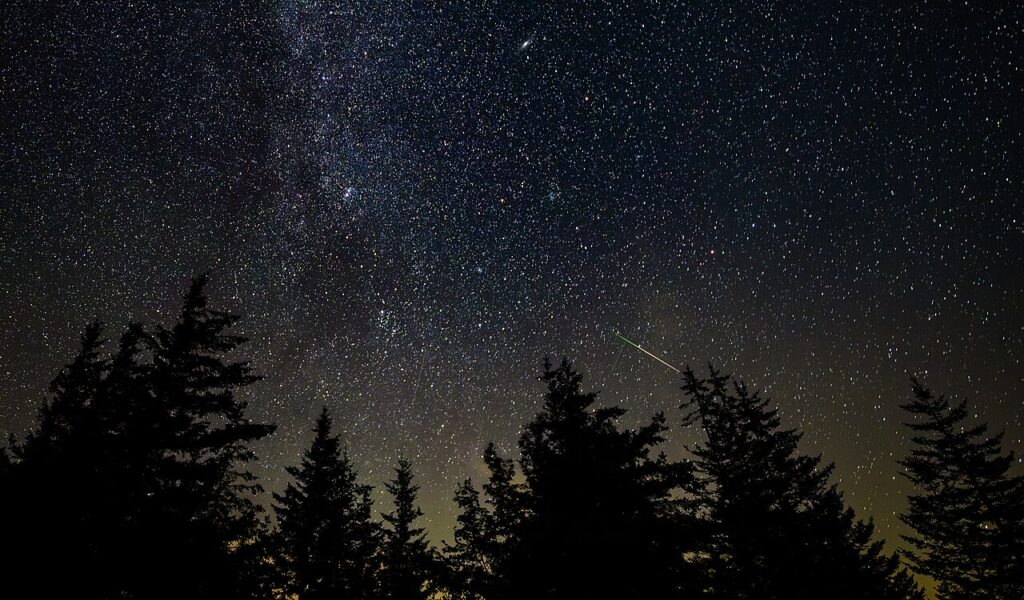

The Northern Taurids meteor shower peaks tonight, Thursday, November 12, giving skywatchers across the United States one of the best chances of the year to spot a slow, bright fireball streaking across the sky. The Northern Taurids 2026 peak arrives with a nearly new Moon, leaving the sky dark for viewing.
The shower is due to peak at 17:57 UTC on November 12, according to the International Meteor Organization working list, with a zenithal hourly rate of about five meteors per hour. That modest rate hides the Taurids’ real appeal: the shower is famous for producing unusually bright, slow-moving fireballs that can outshine the planets. The Moon will be only about 11 percent illuminated, so moonlight will barely interfere with the show.
Best Time to Look Up
The best viewing comes after midnight, when the constellation Taurus, the shower’s radiant point, climbs high in the sky. Find a dark spot away from streetlights, let your eyes adapt for at least 20 minutes, and look up at a wide patch of sky rather than staring at one point. No telescope or binoculars are needed. Dress warmly, as temperatures across much of the eastern United States will be falling with a coastal storm moving in, and bring a blanket or reclining chair for comfort.
The Taurids are debris left behind by Comet Encke, a short-period comet that circles the Sun every 3.3 years. Earth passes through two streams of its dust each autumn, the Southern Taurids in October and the Northern Taurids in November. This year the Southern Taurids peaked in early October, and the Northern branch now takes its turn. Fireballs from the Taurids can linger for several seconds, far longer than the quick streaks of most showers.
No Eclipse Today, Despite the Buzz
Search interest in a “solar eclipse” has spiked this week, but there is no solar eclipse on November 12. The next eclipse is an annular solar eclipse on February 6, 2027, with greatest eclipse at 16:00 UTC, according to eclipse catalogues, and the next total solar eclipse follows on August 2, 2027. The most recent eclipse was a partial lunar eclipse on August 28, 2026. Anyone planning ahead for February should book travel early, as eclipse destinations fill up fast.
Tonight’s Taurids offer a quieter but real celestial event, and the dark Moon makes this one of the better years to catch a fireball. For more sky news, see our report on Voyager 1 hitting one light-day from Earth on November 18.