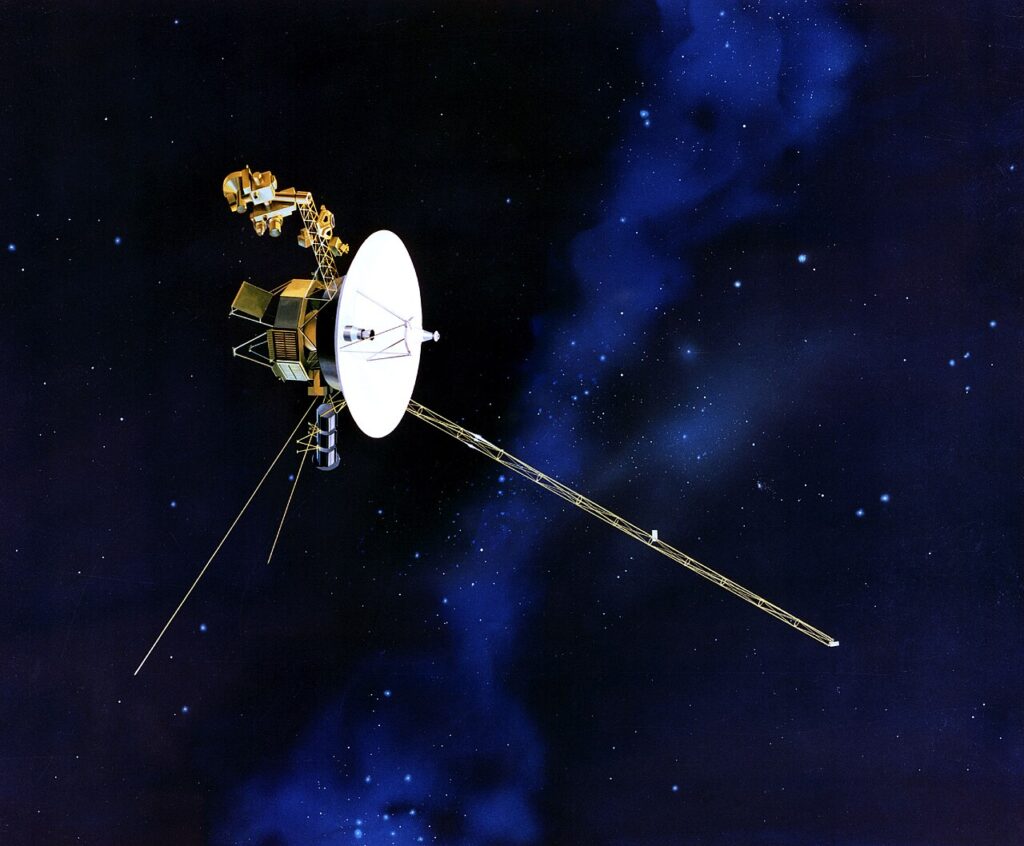

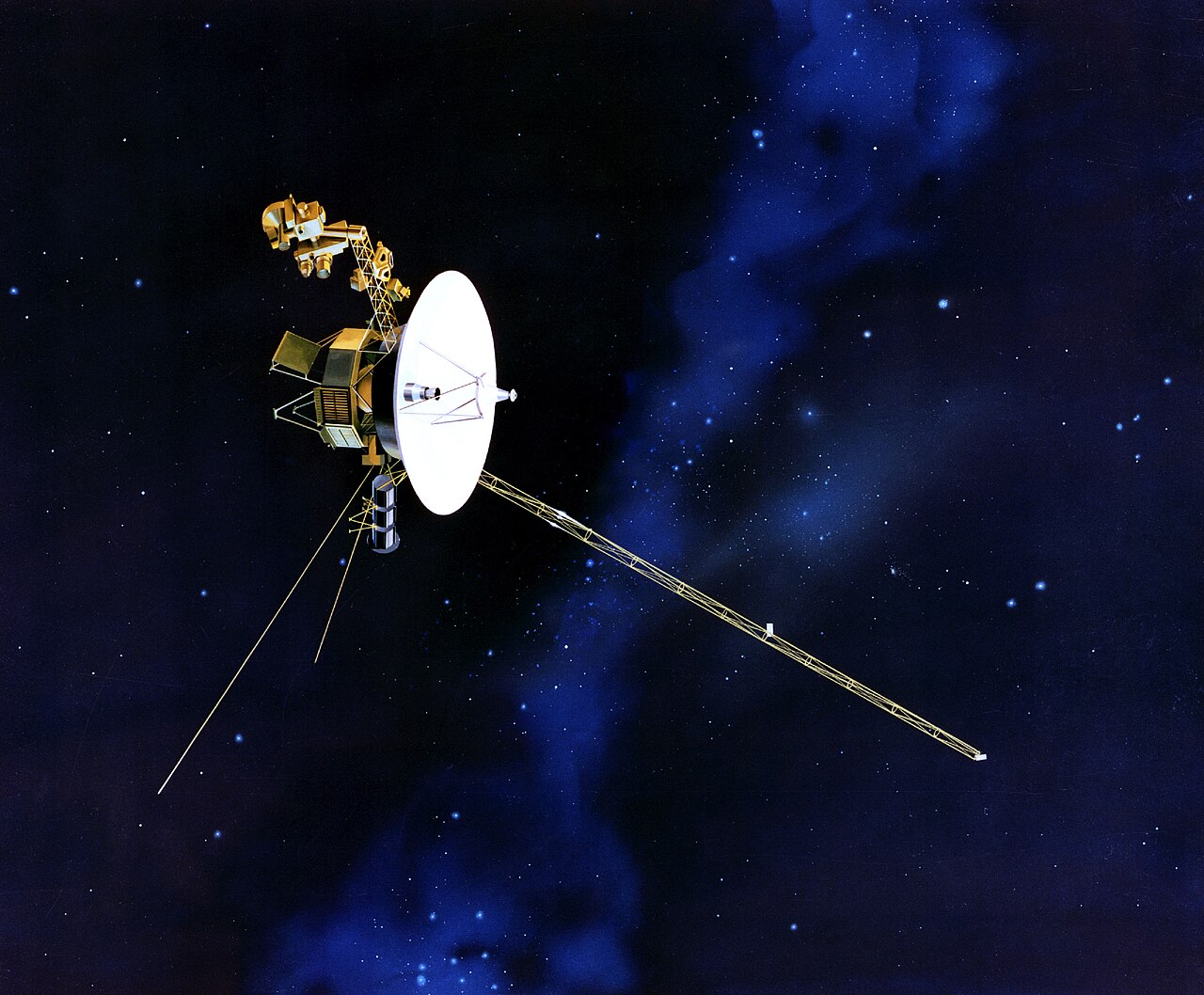
NASA’s Voyager 1 spacecraft is about to reach a distance no human-made object has ever crossed. On November 18, 2026, it will become the first man-made object to travel one light-day from Earth — about 25.9 billion kilometres away, a distance light itself takes 24 hours to cross.
Voyager 1 has been travelling since September 1977, when it launched on a five-year mission to Jupiter and Saturn. Nearly 50 years later it is still sending data home, travelling at about 61,000 kilometres per hour relative to the Sun, and it has been in interstellar space since 2012.
A signal that takes a day
At one light-day, a radio signal travelling at the speed of light needs a full 24 hours to reach the probe — and another 24 hours for the reply to come back. As NASA project manager Suzanne Dodd put it: send your message, go home, and wait two days for the answer.
The milestone will be reached at 5:16:07am EST on November 18, according to NASA’s calculations, and the agency is organising a celebration as early as November 17. Nothing will change on board — the crossing is a reference point chosen to measure the distance, not a physical boundary.
Surviving against the odds
The journey has not been smooth. In September, engineers completed a months-long power-saving effort nicknamed Operation Big Bang, switching off three devices and replacing them with lower-power alternatives. In October, the probe suddenly lost contact with Earth for nearly two days, probably because of an automatic response to a fault in the attitude-control engine, before restoring the link itself.
Voyager 2, launched in the same year, will not reach one light-day until November 2035. Voyager 1’s radio transmitter runs on barely 23 watts, and its plutonium power supply loses about four watts a year — but for now, the oldest spacecraft in history is still talking.
Related reading: NASA Swift Telescope Burns Up and Rubin Observatory Dwarf Planet Candidate