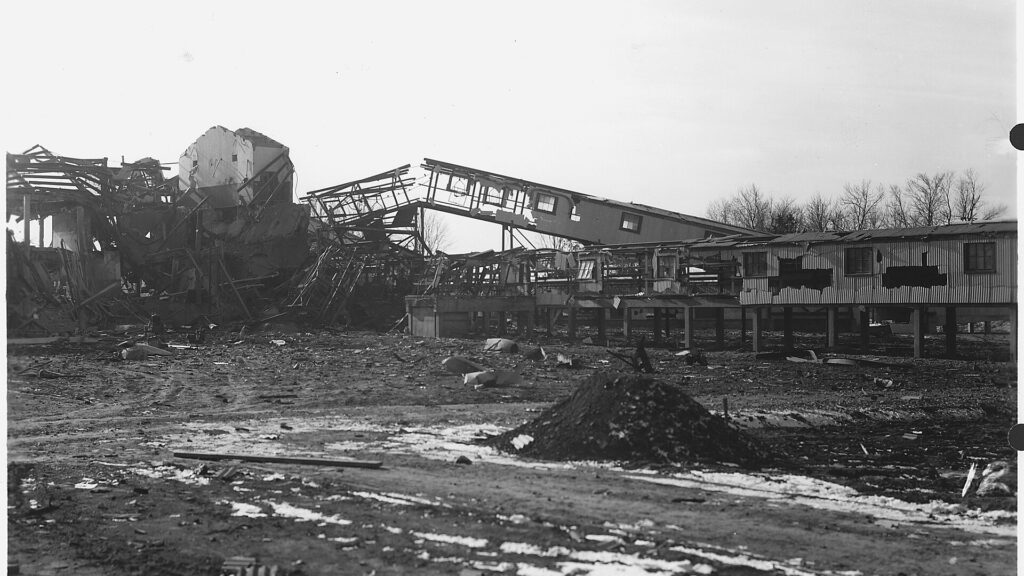

President Donald Trump has ordered the United States Army to pause its planned detonation of nearly five tons of unstable explosives at an Iowa ammunition plant, after a public outcry and a court fight over the safety of the blast. Trump announced the order on Monday, November 23, in a post on his Truth Social platform.
The Army had planned to destroy 68 barrels, or nearly 10,000 pounds (4,500 kilograms), of degraded lead azide at the Iowa Army Ammunition Plant in Middletown, Iowa. Lead azide is an explosive chemical used in military munitions, and the stockpile had deteriorated in storage, raising fears of an accidental explosion. The blast was first scheduled for November 20, then postponed after residents and environmental groups protested, and later reset for Wednesday, November 25.
Court and governor-elect now decide
Trump said he believed the controlled detonation was the proper course, but added that he had ordered the military not to proceed until the Eighth Circuit Court of Appeals agreed the operation could go forward. The court had temporarily halted the blast on Thursday by freezing the Army’s environmental permit, after environmental groups sued to stop it. Hours after Trump’s post, the appeals court lifted that stay, according to Reuters, although the immediate status of the plan remained unclear.
Trump also made his decision subject to the agreement of Rob Sand, the governor-elect of Iowa, who is a Democrat. The president said the decision should be up to the courts and the incoming governor, a move critics described as shifting responsibility for a politically toxic decision.
Environmental groups, including the Iowa Environmental Council, have argued that safer alternatives to open-air detonation were never properly assessed. They warned that the blast would release toxic lead particles into the air, with a dust plume that could travel up to 160 kilometres, threatening crops, livestock and water supplies, according to Al Jazeera. If the plume crossed the Mississippi River, they said, contamination could spread much further downstream.
Residents demand independent monitoring
Local residents have expressed fear about both the planned blast and the risk of leaving the unstable stockpile in place. Researchers from the University of Iowa, led by David Swartney, plan to monitor the air, soil and particles around the facility independently before, during and after any detonation, to give the community evidence rather than assurances.
Health experts note there is no known safe level of lead exposure in children, and lead can harm brain development and learning. The Army has said the material is becoming more unstable the longer it sits, which is why it sought to destroy it quickly. For more on the administration’s clashes with the courts, see our report on Trump’s order to federal contractors over Congress requests, and our coverage of the Democrats’ historic House majority after a recount.