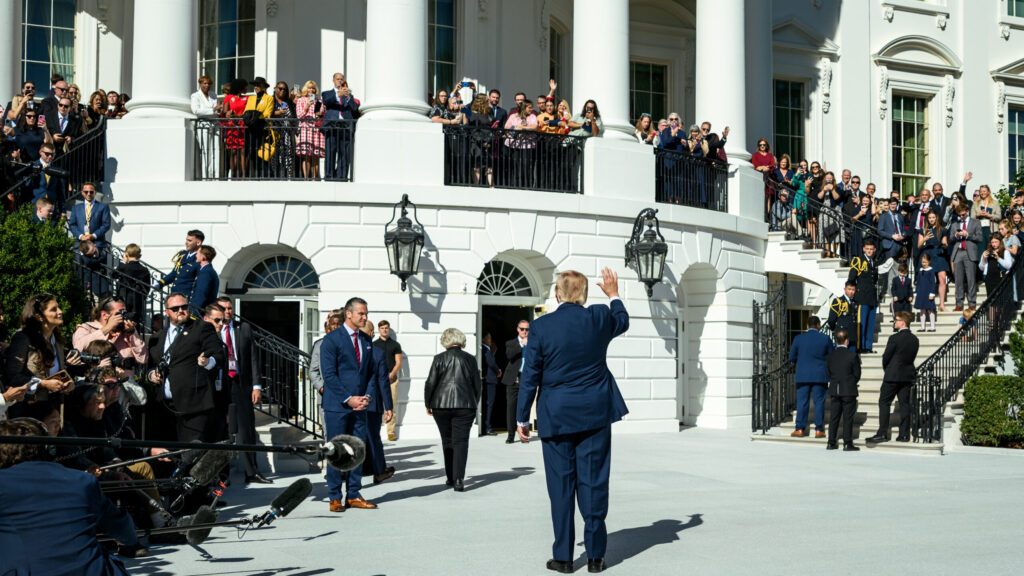

President Donald Trump has signed an executive order directing federal contractors to notify the White House before answering any request from Congress about their work for the government, and to withhold any communications the administration considers privileged. The order, signed late on Friday and published as Executive Order 14438, applies to every federal contractor and subcontractor, tens of thousands of businesses, according to the Associated Press.
Under the order, contractors must immediately tell the White House and the contracting agency about any pending or future congressional request covering their communications or work with the executive branch, and follow any instructions to withhold material the White House or agency deems protected by executive privilege. Agencies must coordinate with the White House and the contractors on what the order calls appropriate responses, and the Office of Management and Budget must issue guidance on how compliance will be enforced.
Democrats call it an attack on oversight
Democrats condemned the move as an attempt to choke off the oversight they plan when they take control of Congress in January. Representative Robert Garcia of California, the top Democrat on the House Oversight Committee, called the order part of the administration’s “blatant attack on Congress’ constitutional right to conduct oversight”, and warned that “we’re just getting started.”
Government contracts are one of the Democrats’ top investigative targets, according to the Associated Press, which noted that federal money has been flowing to companies linked with Trump’s family, particularly at the Pentagon. Garcia sent letters this week directing members of Trump’s family and senior administration officials to preserve documents, while the White House argues Democrats, not yet in the majority, cannot compel compliance.
Part of a wider clampdown
The order is the latest White House step to control how the executive branch answers Congress. On Monday, Trump’s counsel, Will Scharf, told federal agencies they must seek approval from his office and the White House Office of Legislative Affairs before agreeing to appear before Congress. Scharf also suggested in a letter to Garcia that some congressional investigations may amount to “blatant criminality”.
The White House framed the new requirements as protecting executive privilege from congressional overreach, arguing in a fact sheet that some congressional leaders have tried to intrude on executive privilege by “harassing private companies that contract with the federal government.” Presidents of both parties have long invoked executive privilege to resist Congress, but the protection is far from absolute and such claims often lead to long legal fights, the Associated Press noted.
What happens next
Contractors that fail to comply face serious consequences: agencies should consider terminating or cancelling their contracts and debarring or suspending the firms. The order follows other moves to tighten control over federal contracting, including the decision to stop using Anthropic AI across federal agencies. With Democrats due to take over Congress in January and promising aggressive investigations, the order is likely to be tested in court, and in the hearing rooms, within weeks.