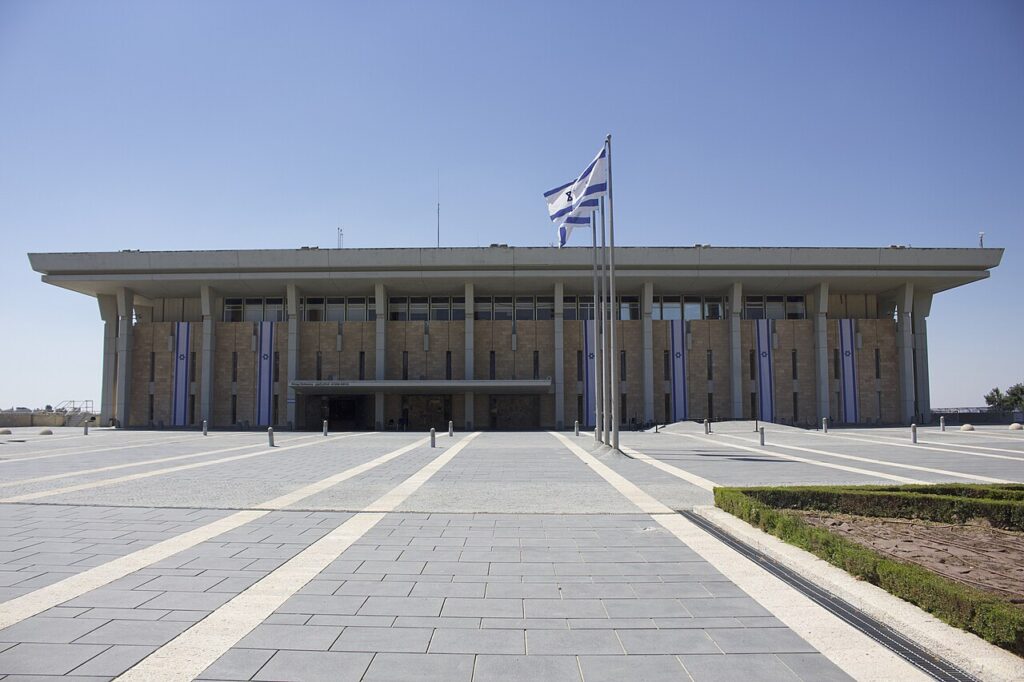


Israel’s election has ended in deadlock, with final results giving Prime Minister Benjamin Netanyahu’s bloc 53 seats, the opposition alliance led by Gadi Eisenkot 48, and Arab-led parties a record 19 — leaving no camp with the 61 seats needed to govern.
The Israel election results deadlock was confirmed when the Central Elections Committee released the final count early on Friday, three days after Tuesday’s vote. Turnout was 77.9 per cent, with more than 5.7 million ballots cast — the highest in decades.
The arithmetic of stalemate
Netanyahu’s Likud emerged as the largest single party with 27 seats, ahead of Eisenkot’s Yashar with 21 and Naftali Bennett’s B’Yachad with 12. Netanyahu’s bloc — Likud 27, Otzma Yehudit seven, United Torah Judaism seven, Shas six and Religious Zionism six — fell from the 68 seats it held in the outgoing parliament to 53, eight short of a majority.
Eisenkot’s bloc took 48: Yashar 21, B’Yachad 12, Yair Golan’s Democrats eight and Avigdor Lieberman’s Yisrael Beytenu seven. The Arab-led parties took the remaining 19 — 11 for the Joint List and eight for Ra’am — a record total, up from 10, after a record number of Palestinian citizens of Israel voted.
What happens next
The results go to President Isaac Herzog on November 4 after final checks, and the new Knesset is due to be sworn in on November 10. Both leading blocs have ruled out a coalition with the Arab parties, which leaves the path to 61 narrow and the prospect of another election within months very real.
The vote was Israel’s first since the October 7, 2023 attacks and was widely seen as a referendum on Netanyahu’s leadership. The answer it gave is unambiguous about one thing: a country divided, with no side able to govern alone.
The kingmaker nobody wants
The most remarkable number in the final count is 19 — the Arab parties’ record haul, delivered by record turnout among Palestinian citizens of Israel. Both Netanyahu and Eisenkot have ruled out governing with them, which leaves the two blocs competing for the same narrow pool of potential defectors and small-party deals. If neither can find 61 seats, Israel faces another election — its third in a cycle of inconclusive votes — and a caretaker government presiding over a country at war on multiple fronts.