
Astronomers using NASA’s Chandra X-ray Observatory have discovered what is triggering repeated outbursts from a giant, unstable star 30 million light-years away — a previously hidden companion, either a black hole or a neutron star, that steals material from the giant every 113 days as the two orbit each other.
The finding, announced on November 9, 2026, and published in the latest issue of The Astrophysical Journal, is the first X-ray detection of this class of erupting star, according to NASA. The volatile star, known as AT 2016blu, sits in the spiral galaxy NGC 4559, about 30 million light-years from Earth.
AT 2016blu is a luminous blue variable, a hot, massive star characterised by large changes in brightness. Astronomers call it a “supernova impostor” because its eruptions mimic the brightening of a star exploding, even though the star survives each blast. Between 2012 and 2026, astronomers detected at least 27 bursts of optical light from the star, roughly every 113 days.
A 100-fold X-ray flare gave the game away
The breakthrough came in March 2026, when astronomers coordinated Chandra observations with an ongoing eruption. The data showed the system was at least 100 times brighter in X-rays than during earlier Chandra observations from 2001 and 2002, before the known series of eruptions began, according to NASA.
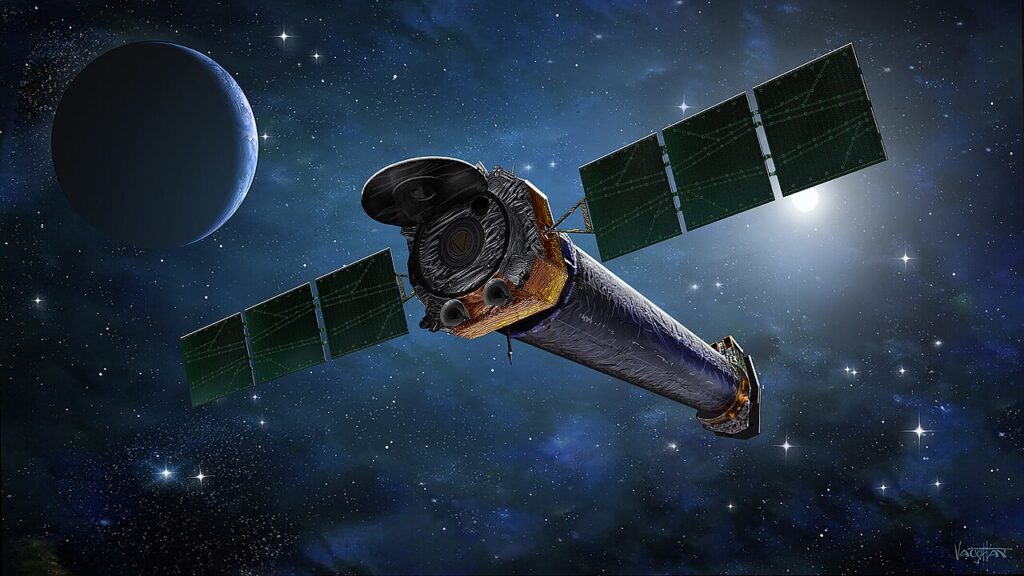
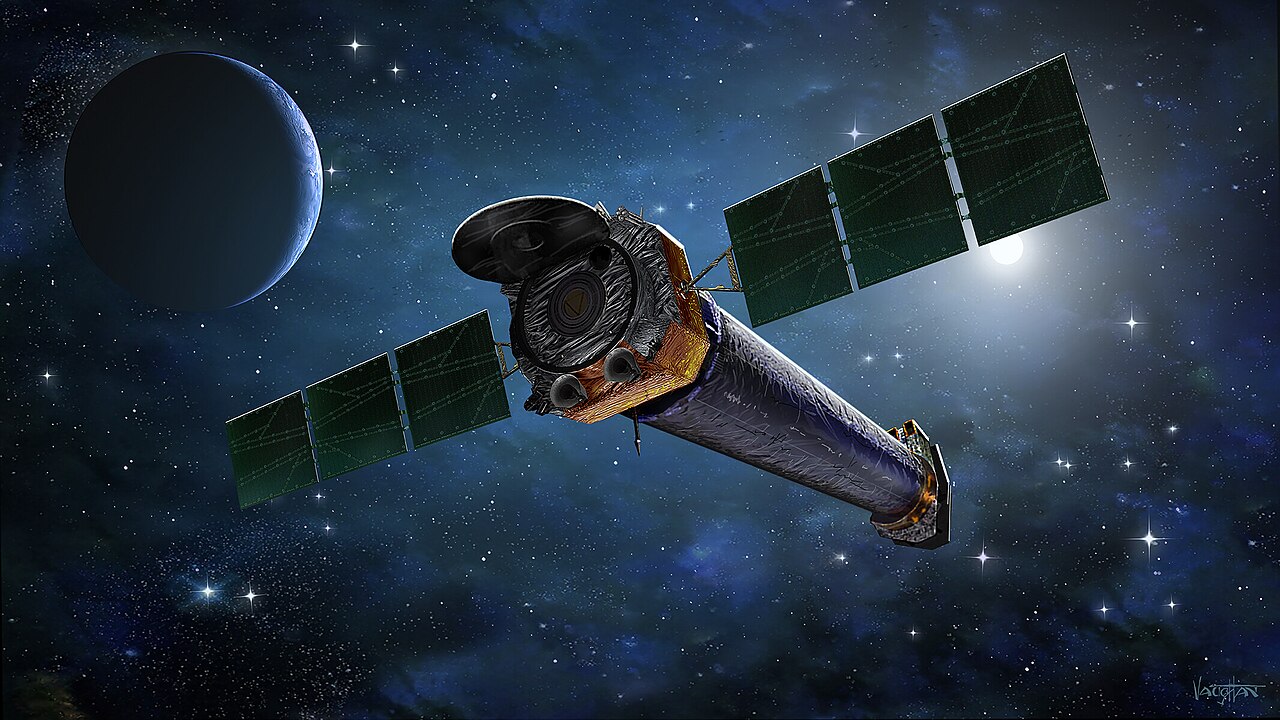
That surge is consistent with material falling onto a compact companion each time the two objects swing close together in their oval orbit, heating up and glowing in X-rays. Chandra was essential because it is the only X-ray telescope with sharp enough vision to distinguish AT 2016blu from another nearby bright X-ray source, according to the researchers. The observations were triggered under Chandra’s “Target of Opportunity” programme after ground telescopes showed the star was in outburst in early 2026.
The study, led by Mojgan Aghakhanloo of the University of Virginia, concludes the companion is either a stellar-mass black hole or a neutron star — the dense collapsed core of a massive star. Scientists have not directly photographed the hidden companion or conclusively identified which of the two it is, according to reports.
A rare class, now with an X-ray identity
AT 2016blu is at least 33 times the mass of the Sun, according to reports, and is now considered a candidate for a rare and poorly understood class of objects called ultra-luminous X-ray sources. It is the first of its erupting-star class found with a black hole or neutron star companion, NASA said.
The discovery matters because luminous blue variables like the famous Eta Carinae are among the most extreme stars known, and astronomers have long debated what drives their violent, repeated eruptions. The Chandra result suggests that at least some of these stars are not erupting alone — a hidden partner is pulling the trigger on a regular schedule.
The star’s next outburst is expected on roughly the same 113-day rhythm, giving astronomers a predictable window to watch the pair again. Each pass offers another chance to pin down the companion’s true nature and to test how much material a black hole or neutron star can strip from a giant neighbour before the giant finally meets its end.
Sources: NASA Science, Phys.org, Nanowerk, Everything Space