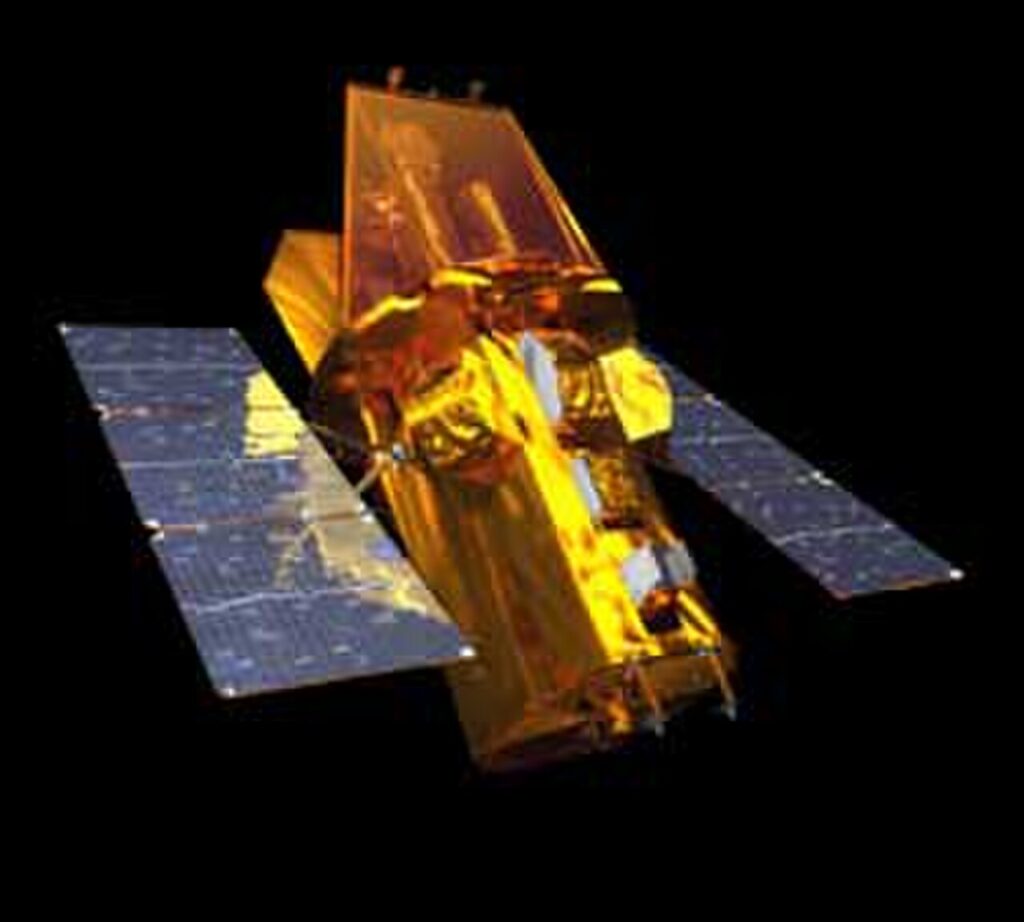


NASA’s Neil Gehrels Swift Observatory burned up as it re-entered Earth’s atmosphere on Wednesday, 4 November 2026, ending a mission that lasted nearly 22 years. The United States Space Force confirmed re-entry at 7:39 a.m. EST above North Sumatra in Indonesia, according to Scientific American and Phys.org.
Swift launched on 20 November 2004 with three telescopes to study gamma-ray bursts, the most powerful explosions in the universe. The mission was originally planned to last two years, but it operated for more than ten times longer, detecting more than 2,000 gamma-ray bursts during its career.
A failed rescue in the summer
Swift took its last look at the sky on 20 October 2026, while orbiting about 171 miles (275 kilometres) above Earth. NASA ended the mission three days later, because Swift had sunk so low that drag from the thin air meant its telescopes could no longer hold steady.
A rescue had been attempted in the summer of 2026. A commercial robotic spacecraft called LINK, launched on 3 July 2026, was sent to raise Swift into a safer orbit, but the attempt failed. LINK itself re-entered Earth’s atmosphere in September 2026, after NASA announced in August that the rescue craft would not capture Swift.
What fell, and where
The telescope weighed roughly 3,200 pounds (1,452 kilograms). NASA said most of it should have burned up, although experts expected a small fraction of its most durable components to survive the plunge. The Space Force put the odds of harm coming to anyone on Earth at one chance in 2,100.
Swift’s orbit only allowed it to fall between 20.5 degrees north and 20.5 degrees south latitude, a band that includes Puerto Rico, the United States Virgin Islands, Guam and Hawaii’s Big Island. It came down over North Sumatra, at about 3 degrees north and 99 degrees east, with no reports of injury or damage. The sparsity of sensors in those tropical regions contributed to the delay in confirming the re-entry, which was attributed to the Space Force on Wednesday afternoon. Swift leaves behind a remarkable archive: two decades of rapid alerts that let telescopes around the world swing towards new explosions within seconds, and a generation of astronomers who learned their trade chasing its bursts. For a mission built to last two years, 22 years in space is a record in its own right.


