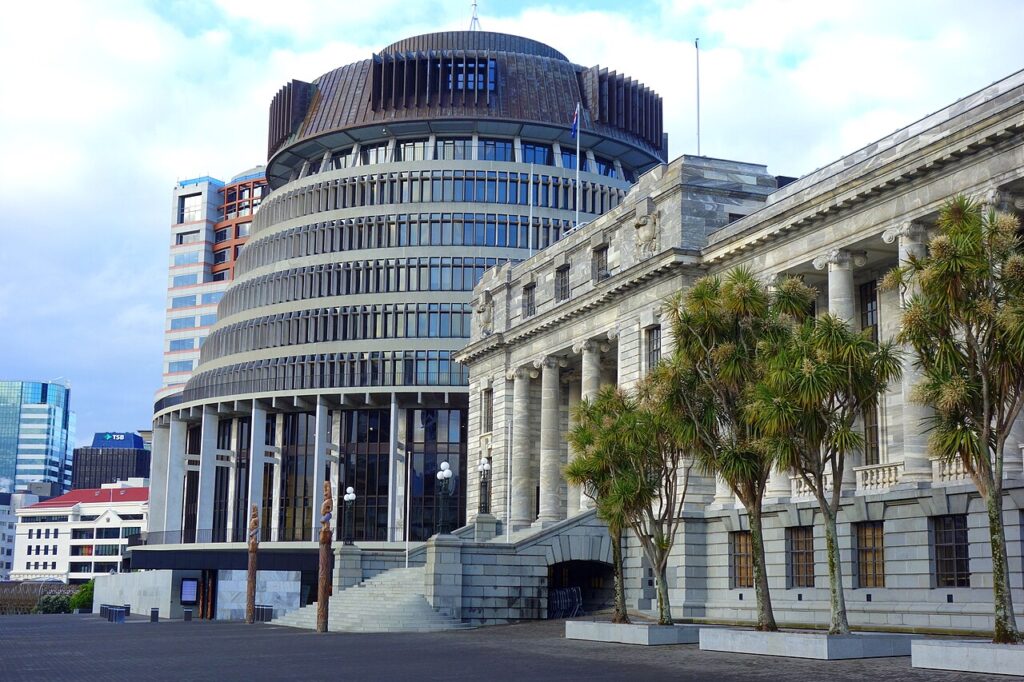


New Zealand’s general election has ended in a dead heat, with Labour winning the most party votes by just 3,650 — but National winning the most seats, leaving nobody able to claim victory until the official result on 27 November.
The Electoral Commission’s preliminary count, with 100 per cent of voting places counted, gives Labour 710,330 party votes, or 29.36 per cent, against National’s 706,680, or 29.21 per cent, a gap of 3,650 votes. The figures were published after polls closed at 7pm on Saturday, 7 November, and the Commission stresses that the preliminary count is indicative only and not a formal declaration of the result.
The seat picture tells a different story from the vote share. Because National won 42 electorate seats — more than its party vote entitles it to — it takes no list MPs, and six of its electorate seats become overhang seats. The result is a record 131-seat Parliament, where 66 seats are needed to govern. On the preliminary allocation, National holds 42 seats, ACT 13 and New Zealand First 12, giving Prime Minister Christopher Luxon’s governing bloc 67 seats — a majority of one. Labour holds 36 seats, the Greens 16 and Te Pāti Māori 5, for a total of 57 on the Labour-led side.
A result that will move
About 399,365 special votes are still to be counted, including about 96,947 cast from overseas or by dictation, according to the Electoral Commission’s estimate. Special votes are not counted until the official count, and the Commission aims to publish the official results on Friday, 27 November. One report cited a much larger estimate of about 700,000 special votes; the Commission’s published estimate is about 399,365, and that is the figure used here.
The special votes matter enormously because the margin is so small. Labour’s lead of 3,650 votes is under 1 per cent of the special votes still to be counted, and the seat allocation, the overhang and several electorate margins are all expected to move. Neither Luxon nor Labour leader Chris Hipkins conceded or claimed victory on the night, with Luxon saying the result was too close to call and Hipkins saying the shape of the next government would remain uncertain “for a while”.
The minor parties hold the balance
The Greens finished on about 13.3 per cent of the party vote, ACT on about 10.9 per cent, New Zealand First on about 9.8 per cent and the centrist Opportunity Party on about 6.0 per cent, crossing the 5 per cent threshold to take seven seats. Te Pāti Māori won just 0.6 per cent of the party vote but leads in five of the seven Māori electorates.
The combined party vote for National and Labour, 58.6 per cent, is the lowest for the two big parties since New Zealand’s mixed-member proportional system began. Commentators who have run the numbers mostly see a second National-led term as the most likely outcome, but with the special votes still to come and a one-seat preliminary majority, nothing is settled. The sharpest policy dividing line in the campaign was Labour’s proposed 28 per cent capital gains tax on investment and commercial property from July 2027, which National ruled out.
Related coverage: New Zealand Election: National Leads Early as Kiwis Vote | Mississippi Senate Race: Colom Lead Grows to 2,696 Votes


