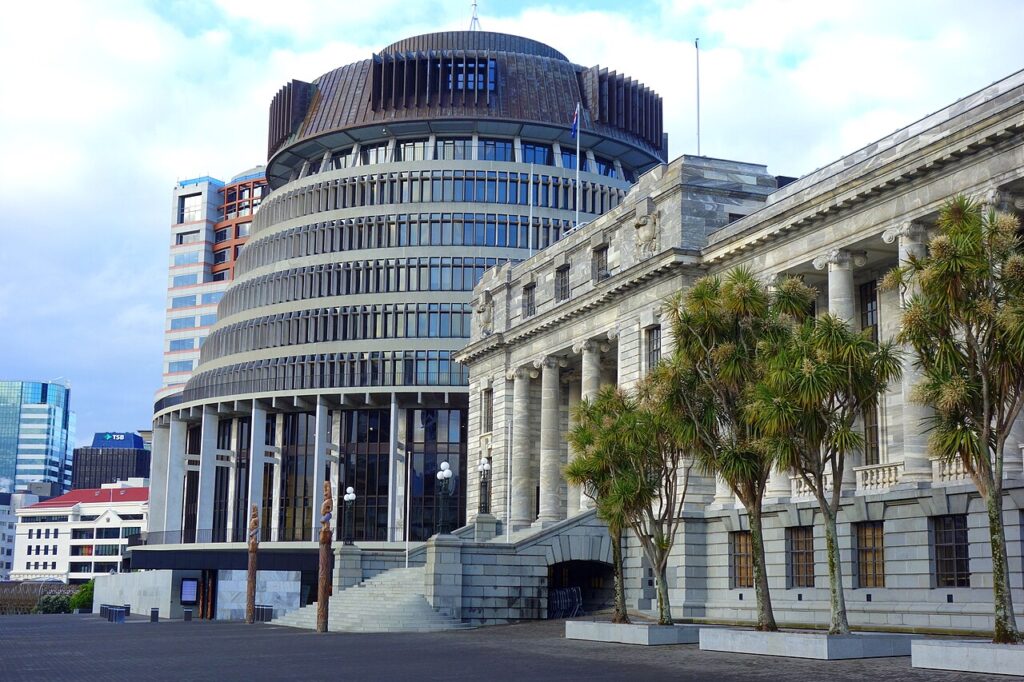


New Zealand will not know who forms its next government until 27 November, after Saturday’s general election ended in deadlock and officials began counting nearly 400,000 special votes on Sunday. The count, expected to take three weeks, is the only thing standing between the country and a government — and it could yet overturn the wafer-thin lead held by the incumbent centre-right bloc.
The Electoral Commission estimates about 399,365 special votes, including 96,947 from overseas and by dictation, or about 14 per cent of all votes cast. Special votes are ballots cast outside a voter’s registered electorate or not on the printed roll, and they have historically leaned left, granting an additional seat or two to left-wing parties in past elections.
On the preliminary count, Labour won the most party votes — 710,330 votes, or 29.36 per cent — ahead of National on 706,680 votes, or 29.21 per cent. But National won the most seats, 42 to Labour’s 36, because it won its seats entirely through local constituency races. The total number of seats in Parliament currently stands at 131, with 66 needed for a majority.
A one-seat lead under threat
Prime Minister Christopher Luxon’s conservative bloc — National, ACT and New Zealand First — currently holds 67 seats, a single seat above the majority line, with ACT on 13 and New Zealand First on 12. The left bloc led by Chris Hipkins’ Labour holds only 57 seats, with the Greens on 16 and Te Pati Maori on five. The biggest surprise of the night was Opportunity, a newcomer party led by 38-year-old business consultant Qiulae Wong, which won seven seats and a place in Parliament for the first time.
Luxon stopped short of claiming victory on election night, speaking instead of cautious optimism that he could negotiate a second term. He will lead a caretaker government until an outcome is reached. Parties will not begin formal negotiations to form a government until the final tallies are released on 27 November, confirming the exact number of seats each has won.
What the specials could change
Labour leads National by only 3,650 party votes — under one per cent of the roughly 399,000 special votes still to count. If the specials lean left, as they have in the past, that lead simply grows, and the coalition’s current advantage could be erased. Analysts estimate the governing bloc’s lead over the four opposition parties would need a net swing of about 4.3 points in the specials to disappear entirely.
If no bloc can form a majority after the final count, New Zealand could face a fresh vote. For now, both sides wait on the Electoral Commission, and the country waits with them.
Sources: NPR via World Right Now / JingleTree (8–9 Nov 2026); Electoral Commission preliminary results via Wikipedia (9–10 Nov 2026); SixtyOne live results (10 Nov 2026); The Daily Jagran (8 Nov 2026).


