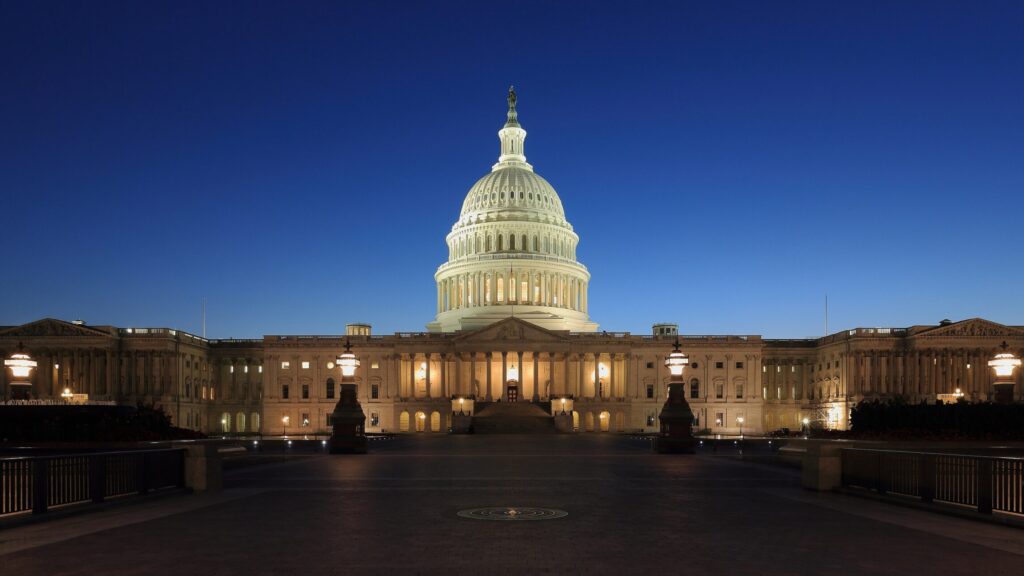

The United States Senate on Thursday rejected a war powers resolution that would have ordered President Donald Trump to pull American forces out of hostilities with Iran, voting 51 to 48 against the measure in the first recorded vote on the war in either chamber since the November 3 midterm elections, according to Reuters. The vote defeated H.Con.Res.93, a House-passed concurrent resolution that invoked section 5(c) of the War Powers Resolution and directed the president to remove US armed forces from hostilities against Iran unless Congress passed a declaration of war or a specific authorization for military force.
The resolution had passed the House on September 15 by 220 votes to 204, with seven Republicans joining Democrats. Its defeat in the Senate stopped that particular congressional directive, although the vote itself supplied no new statutory authorization for military action. The Senate’s official floor account recorded the result at 2:42 p.m. Eastern time on roll call number 269. One senator, Chris Murphy of Connecticut, did not vote. The measure needed only a simple majority to pass, but fell three votes short.
Three Republicans break ranks as Fetterman dissents
The vote was largely along party lines, but with notable crossovers on both sides. Three Republicans voted in favour of the resolution: Susan Collins of Maine, Lisa Murkowski of Alaska and Rand Paul of Kentucky. Every Democrat who voted backed the measure except John Fetterman of Pennsylvania, who voted against it. Both independents, Angus King of Maine and Bernie Sanders of Vermont, voted yes. Senator Thom Tillis of North Carolina, who had voted for an earlier war powers measure in September and is retiring when this Congress ends, voted no on Thursday. The result means the resolution cannot obtain the approval of both chambers, and the White House faces no congressional order to end the campaign.
Midterm verdict ignored, critics say
The vote came sixteen days after an election in which many in both parties read the results as a verdict on the war with Iran, with sweeping Republican defeats tied in part to public frustration with the conflict. Critics of the war argued the Senate had been given one last chance to put its name to that verdict and declined. Supporters of the administration said the resolution would have tied the president’s hands while American forces remain engaged. The debate unfolded as Netanyahu pressed Trump for strikes on Iran, and as the Pentagon disclosed that the war has now cost $48.3 billion. Trump, Xi and Putin met in Shenzhen on the same day, a summit Moscow cast as a geopolitical win that exposed Europe’s failure to isolate Russia.