

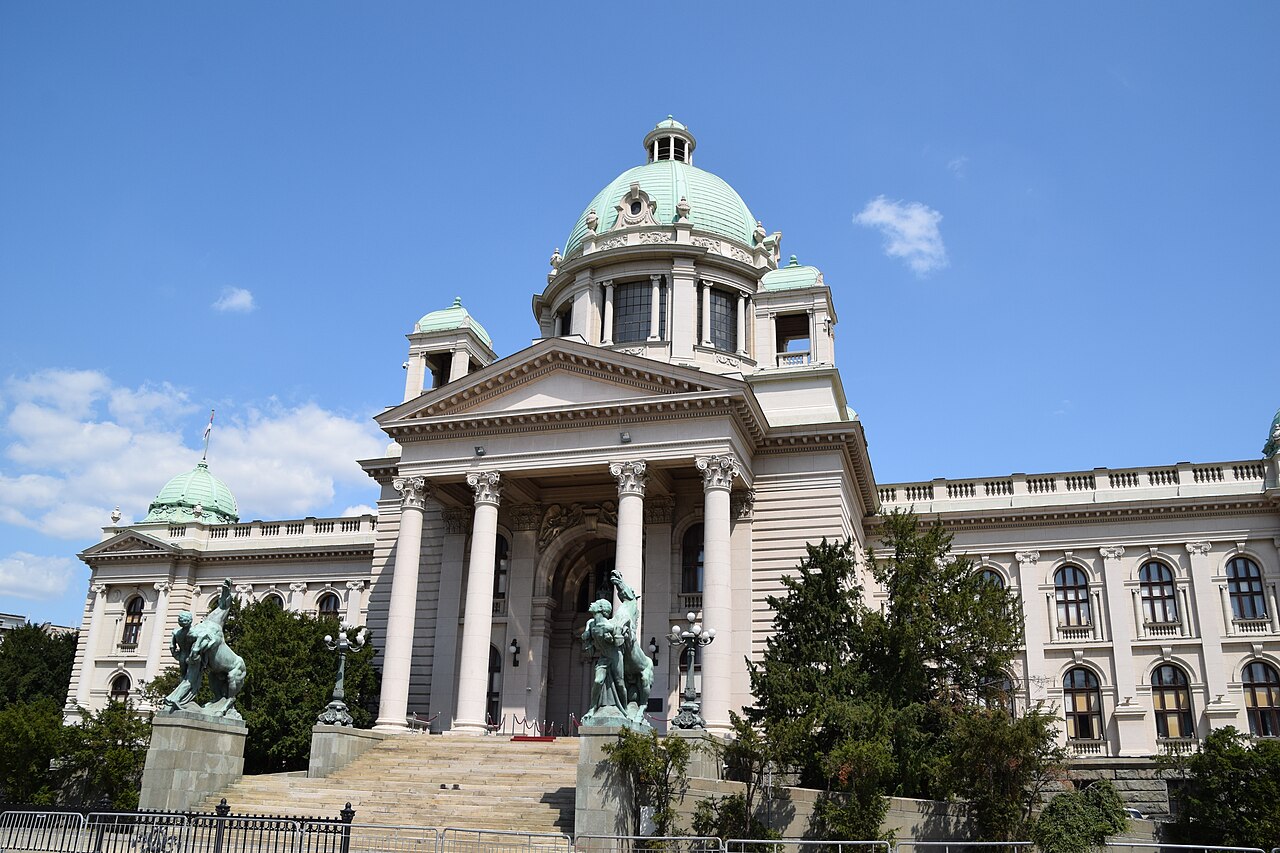
Serbia snap election voting is taking place on Sunday, in a parliamentary contest widely described as the most fiercely fought in the country in more than a decade, pitting Aleksandar Vucic’s ruling party against a student-backed list born from two years of protest.
Voters are choosing 250 members of the National Assembly from 18 electoral lists featuring 2,418 candidates, according to Euronews. More than 6.45 million people were eligible to vote, with polling stations open from 7 a.m. to 8 p.m.
The election was called after Vucic dissolved parliament on September 9, following a proposal by the Serbian government. But the deeper cause, according to reports, is nearly two years of political polarisation that began with the collapse of a concrete canopy at Novi Sad railway station on November 1, 2024, which killed 16 people.
From street protests to the ballot box
Student protests that followed the Novi Sad disaster initially demanded accountability and the publication of reconstruction documents, according to Euronews. During 2025 the movement organised mass protests, university blockades and rallies across Serbia, gradually becoming the strongest challenge to Vucic’s government in 14 years.
In May 2025 students called for snap parliamentary elections, and during 2026 they decided to contest the vote with their own list, the Students’ List. According to Deutsche Welle, the list includes university academics, medical professionals, artists and other candidates from outside established political leadership, led by cardiologist Ilija Srdanovic.
A referendum on 14 years in power
The contest has been framed as a referendum between Vucic’s right-wing Serbian Progressive Party and the youth-backed challengers. Vucic, who has dominated Serbian politics for more than a decade, stepped down as president to run for prime minister, according to reports, after being unable to seek a third presidential term.
Polls suggested a tight race, and the campaign’s fairness has been questioned. According to RFE/RL’s Balkan Service, cited by the Geneva Times, some 500,000 people were registered to vote without a full address, raising fears of electoral fraud. International observers also reported irregularities after Serbia’s last election in 2023.
Whatever the result, the vote marks a transformation: a movement that began demanding answers over a station canopy collapse is now seeking to convert street protest into parliamentary power, with implications for Serbia’s direction towards Europe and its relationships with Russia and China.


