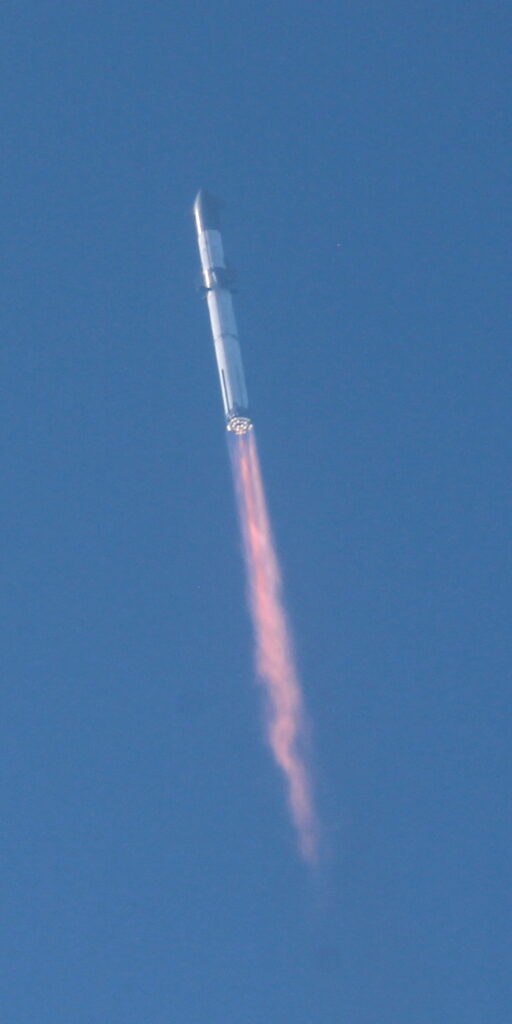

SpaceX Starship Flight 15 lifted off from Starbase, Texas, on Friday, November 13, at 5:47 p.m. ET, and its upper stage reached orbit for only the second time in the program’s history, deploying 26 of the company’s latest Starlink V3 satellites. But the mission’s headline goal, the first catch of both rocket stages in a single flight, was lost within minutes when flight controllers aborted the Super Heavy booster’s return to the launch tower.
About six and a half minutes after liftoff, automated safety checks called off the catch, and the 236-foot Super Heavy booster was diverted to a controlled splashdown in the Gulf of Mexico, where it burst into flames as residual propellants ignited on reaching the water, according to CBS News. SpaceX has not said what triggered the abort, and its teams are reviewing the booster telemetry to find out. The booster was a newer Version 3 model fitted with Raptor 3 engines, and a successful catch would have been the first recovery of that version.
The Ship Keeps Flying
The upper stage, Ship 42, nicknamed “Don’t Panic”, had a better evening. It reached orbit at about 6:13 p.m. ET, only the second time a Starship upper stage has made it to orbit at all, and began releasing its cargo of 26 Starlink V3 satellites about 35 minutes into the flight, completing the deployment over roughly 42 minutes. SpaceX said the cluster adds a terabit of data capacity to the Starlink network. The ship is expected to spend about 22 and a half hours in flight, completing 14 orbits, before returning toward Texas for a catch attempt scheduled for about 4:17 p.m. ET on Saturday, November 14, if all systems needed to guide it through the atmosphere are healthy.
What It Means for the Program
Flight 15 was designed as the first attempt to recover both stages of Starship during a single mission, extending the catch technology already demonstrated with the Super Heavy booster. Friday’s flight follows Starship’s first successful orbital mission in September, when Flight 14 also deployed 26 Starlink V3 satellites. For the preview of this mission, see SpaceX Starship Flight 15 targets first dual catch on Nov 13. If Saturday’s catch succeeds, it would be the first time a spacecraft returning from orbit has ever been caught by the tower.