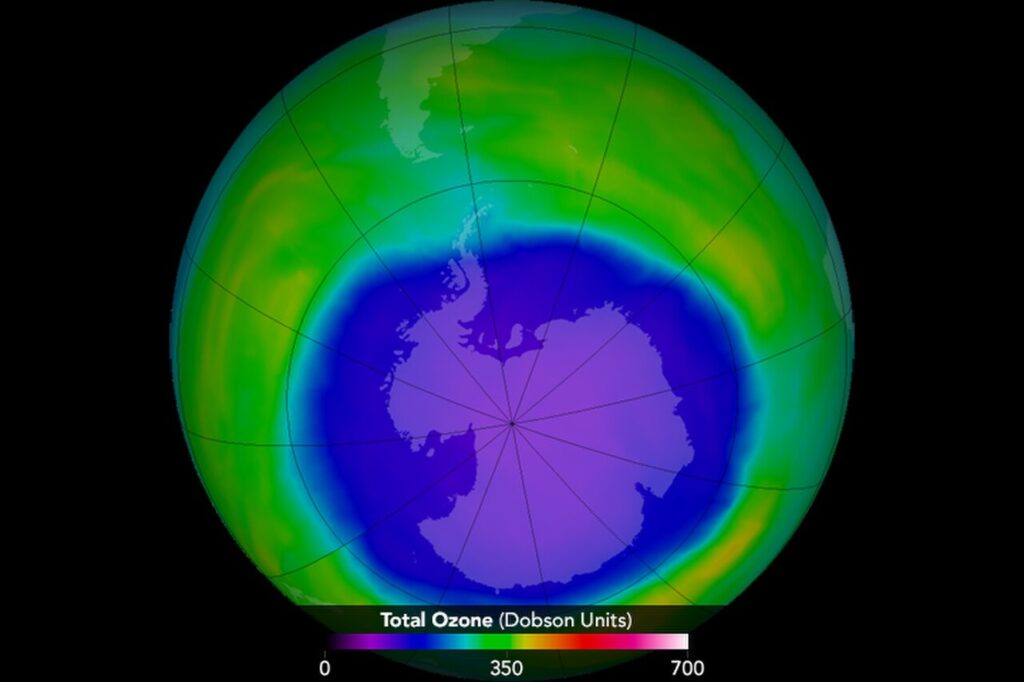

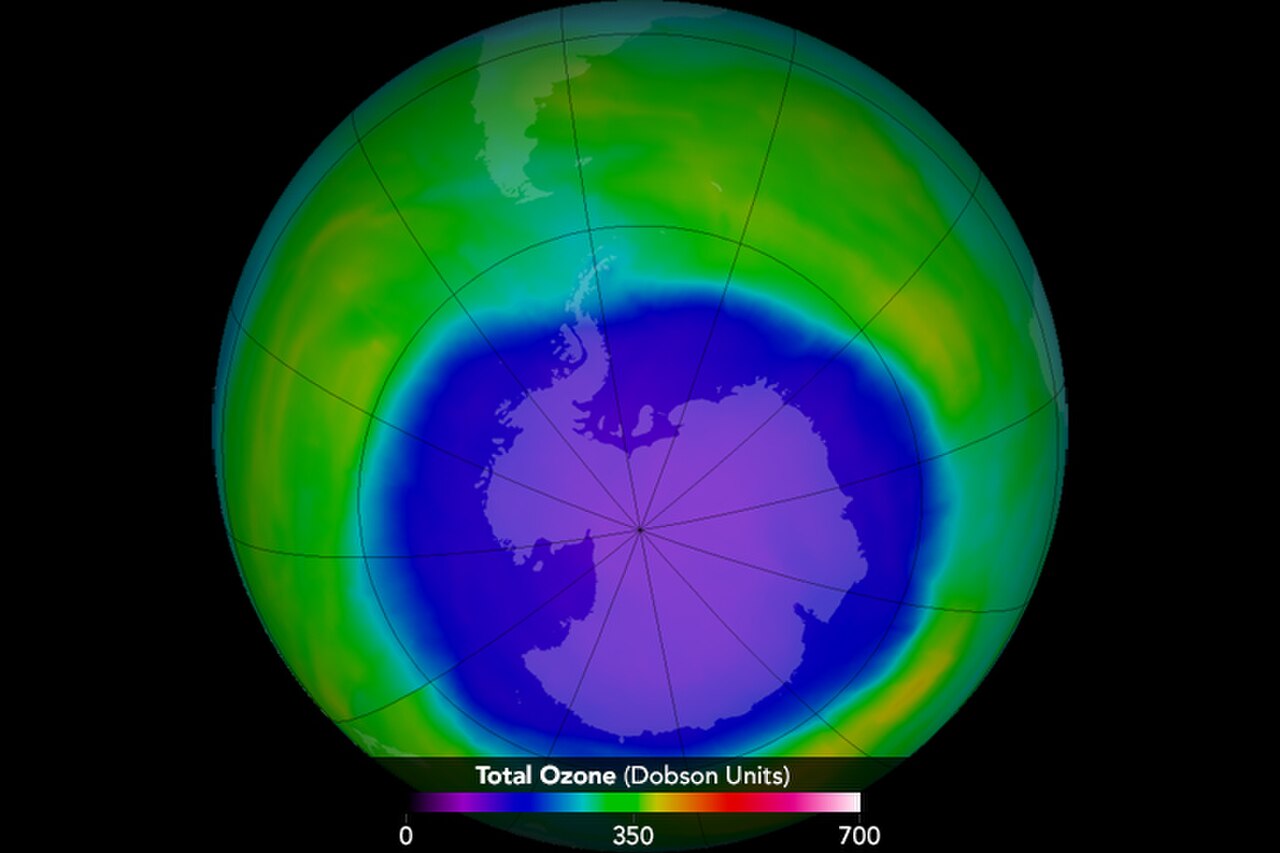
The Antarctic ozone hole ranked seventh largest by area in 48 years of monitoring in 2026, NASA and the National Oceanic and Atmospheric Administration (NOAA) reported on 4 November 2026. The hole was large, but scientists stressed it was not as deep as other large holes on record, and the long-term recovery remains on track. An unusually strong Antarctic polar vortex created ideal conditions for ozone depletion over a large area. Measured by its mean size from 7 September to 13 October, the peak depletion season, the 2026 hole averaged about 9.6 million square miles (25 million square kilometres), more than twice the area of the United States.
The biggest single day: 18 September
The hole reached its greatest extent for the year on 18 September 2026, at 10.5 million square miles (27.1 million square kilometres). That is about 90 percent as large as the largest ozone hole ever observed, which occurred on 9 September 2000. Scientists define the ozone hole as the area where ozone concentrations drop below 220 Dobson units. NOAA balloon instruments at the South Pole found that ozone concentrations directly overhead reached their lowest value for the year, 105 Dobson units, on 17 October. The record low is 92 Dobson units, measured in October 2006. The 2026 hole was therefore wide, but not exceptionally deep.
Recovery is still on track
Scientists said the 2026 hole would have been 1 to 2 million square miles larger if ozone-depleting substances were as prevalent in the atmosphere today as they were at their peak in 2000. Chlorine from controlled chemicals in the Antarctic stratosphere has declined by roughly one-third from its earlier peak, and scientists estimate the Antarctic ozone layer will return to 1980 levels in the 2070s. The Montreal Protocol, which took effect in 1987, continues to drive that recovery. A single large year, driven by weather in the stratosphere, does not contradict the long-term trend, according to NASA and NOAA. The hole has also been forming later in recent years, which scientists read as another sign of recovery. By contrast, the 2025 Antarctic ozone hole was the fifth smallest since 1992, a reminder of how much year-to-year weather can swing the figures. Monitoring continues through NASA’s Ozone Watch and NOAA’s South Pole station, using satellites, weather balloons and ground instruments, so next year’s hole will be measured the same careful way.