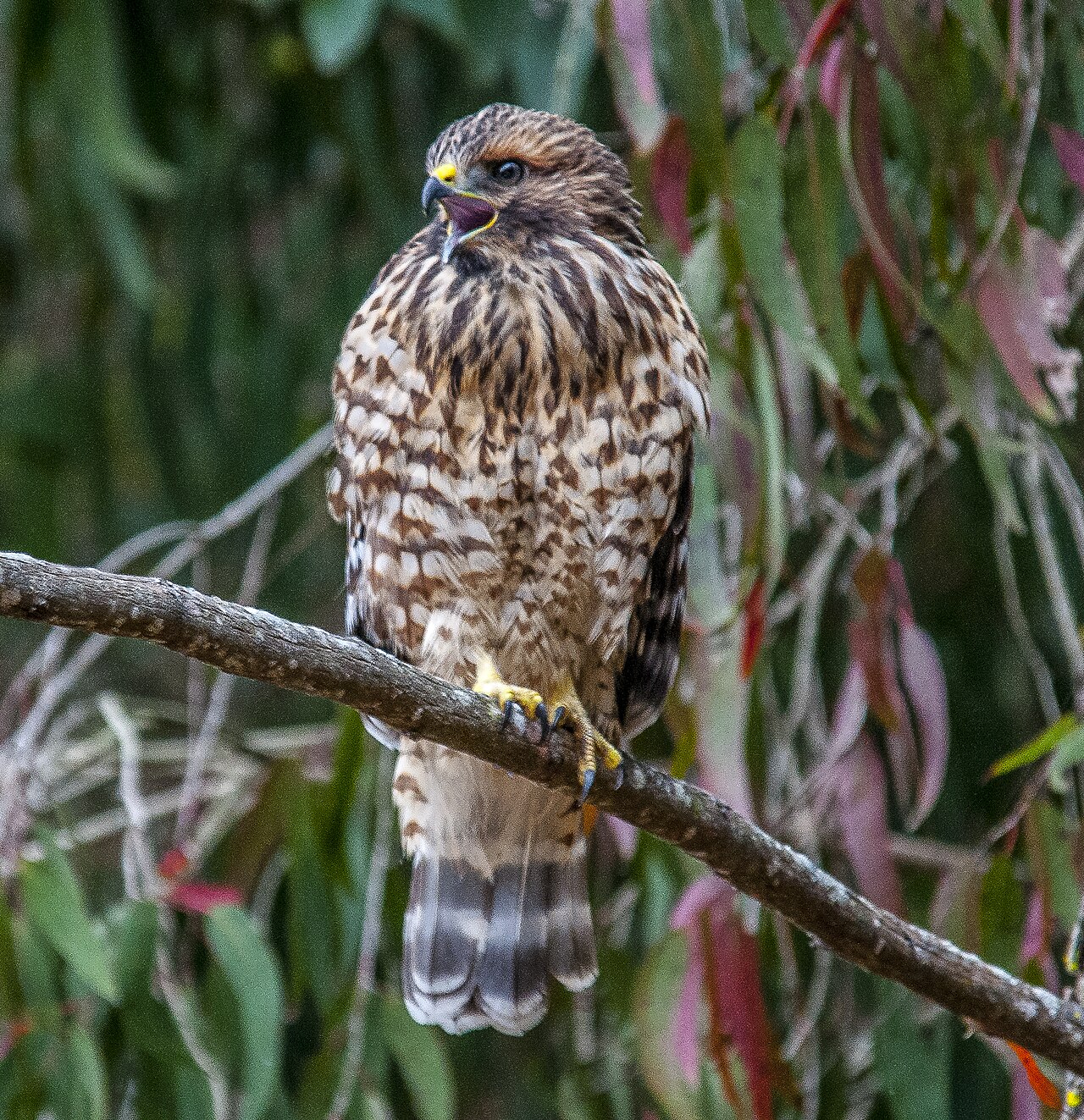
A red-shouldered hawk in Virginia that became too heavy to fly after feasting on a neighbour’s chickens is flying again, after losing about 130 grams in a little over a month at a wildlife centre. The update was shared by the Southwest Virginia Wildlife Center of Roanoke on 8 November 2026, and reported by Dexerto the same day. The hawk, known to staff as Miss RSHA 26-2599 and nicknamed “the Queen”, was found sitting in a driveway in Roanoke, about a mile from the centre, unable to fly. Staff checked her for broken bones, lead poisoning, eye problems and head trauma, and every test came back clean. Then they put her on the scale.
910 grams, and a diagnosis to match
A female red-shouldered hawk typically weighs about 700 grams, but this bird weighed 910 grams, or a little over two pounds, about 25 to 30 percent heavier than normal. She had so much body fat that staff could not feel her keel, the ridge of breastbone rehabilitators check to assess a bird’s condition. The centre’s own diagnosis, in its words, was that she was “too darn fat to fly.” The centre asked around and discovered that nearby free-range chicken owners had mysteriously lost chickens without a trace. The hawk had apparently spent weeks eating the chickens before sleeping in nearby trees. The story was first reported by UPI on 2 November 2026, and by Fox Weather on 6 November 2026.
Flying again, but not ready for release
In the 8 November update, the centre wrote: “She’s flying again!” After a little over a month of a controlled feeding plan and daily exercise in the flight pen, she had lost about 130 grams. She is not free yet. Staff say she remains significantly overweight and can only manage four or five laps around her flight enclosure before becoming exhausted, and there is still no confirmed date for her release. The centre’s advice is to keep chickens in covered runs and not to feed wildlife, directly or indirectly. When she is ready, she will be released back into the general area where she was found. The story travelled widely because the diagnosis was so plain and so funny, but the centre’s message was serious: a wild animal that finds easy food can eat itself into trouble, and the fix takes weeks of patient work. For now the Queen is still in the flight pen, building up her strength lap by lap, and her keepers say they are thrilled with her progress, even if the road back to the wild is not finished yet.